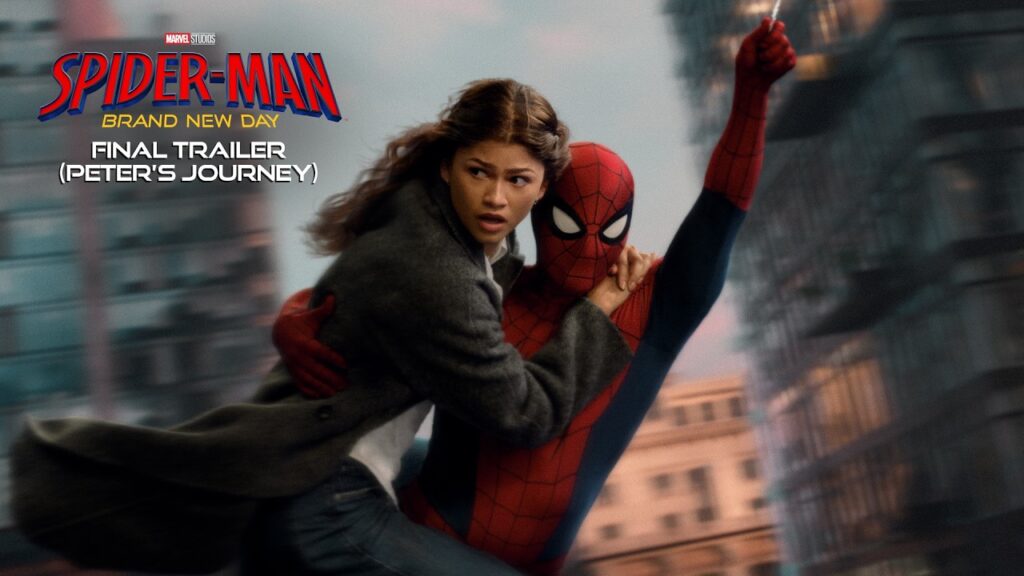
Four years after No Way Home erased Peter Parker from the world’s memory, Spider-Man: Brand New Day swung into theaters on July 31, 2026, and brought one of the largest visual effects efforts in the character’s history with it. Directed by Destin Daniel Cretton, the film leans hard on its VFX to sell a lonelier, more physically punishing Spider-Man, and the studios behind the curtain did a lot of heavy lifting to get there.
A seven-studio effort
Visual effects supervisor Jerome Chen (Jumanji: Welcome to the Jungle, Godzilla) oversaw the show, with David Bosco producing. The workload was split across Sony Pictures Imageworks, Framestore, ILM, RISE, Cantina Creative, Soho VFX, and SDFX Studios, a smaller vendor list than No Way Home, which spread its 2,500 shots across twelve studios and roughly 3,000 artists. That contraction has fueled some of the wider industry conversation around this film, more on that below.
Comic covers, brought to life
The film opens with a montage recreating iconic Spider-Man comic covers, including a nod to Amazing Spider-Man #134 and its battle with Tarantula. Getting those panel-accurate compositions on screen wasn’t a pure CG job: behind-the-scenes photos show stunt performers in blue-screen bodysuits physically holding a Tarantula performer aloft against a wall while Holland’s Spider-Man clung beside him on wires and step rigs. It’s the kind of shot that reads as effortless CGI but was built from practical rigging first, with digital cleanup finishing the illusion.
Suit simulation and the 420fps question
The digital suit work goes beyond a static asset. Fabric simulation had to track realistic stretch, wrinkling, and strain across every swing and impact, which matters more in a film built around handheld, in-camera stunt work than in one relying on a heavily CG double. Reports indicate a significant portion of Tom Holland’s stunt work was captured on camera at up to 420 frames per second, letting the visual effects teams composite digital elements (webbing, suit strain, environment extensions) onto real photography of Holland’s own movement rather than building the performance from scratch.
“Tom still manages to strike the perfect pose, find the right rhythm and use his body to bring it to life,”
a member of the filmmaking team, on shooting Holland’s stunts at high frame rate
The Hulk returns, and he’s not smart anymore
Mark Ruffalo returns for a full performance-capture pass as the Hulk, but this time it’s the classic “Savage” incarnation rather than the hybrid Smart Hulk seen since Endgame, meaning the animation and simulation teams had to rebuild the character’s proportions, muscle dynamics, and movement quality from the ground up rather than reuse the more restrained rig. A motion-capture double, Teifion Sussex, handled additional digital-double work alongside the principal cast.
Rebuilding New York
Production shot largely on built sets and locations around Glasgow and Pinewood, with digital environment work extending those plates into a full Manhattan skyline, multiplying crowds, and handling destruction and debris interaction. Marketing materials tightened up considerably as release approached: an international TV spot released a couple of months before launch swapped a generic city skyline for a more recognizable one anchored by the Manhattan Bridge, added web-shooter details to a bus-impact shot, and pushed the color grade brighter to make the new suit read better on screen, a reminder that trailer VFX is very often a work in progress right up until the final cut locks.
The context worth naming
It’s worth sitting with the vendor and headcount contraction mentioned above. Industry advocates have pointed out that Marvel’s VFX pay has lagged the wider industry average, and that staffing on recent projects has run leaner than comparable work elsewhere, criticism that’s been building for several years now, alongside well-documented crunch on other MCU titles. None of that shows up on screen, but it’s part of how the screen got made, and it’s context this site tries to keep in view whenever we cover a tentpole’s VFX credits.
Worth watching
Jerome Chen is set to break down the film’s effects work in person at VIEW Conference 2026 in Turin this October, which should be a good source for a deeper technical read once it happens. For now, Brand New Day is a solid example of a film using invisible, hybrid effects (practical rigs, high-frame-rate photography, and targeted CG augmentation) rather than leaning on a fully synthetic hero for its biggest moments.
Spider-man: Brand New Day trailer

Leave a Reply