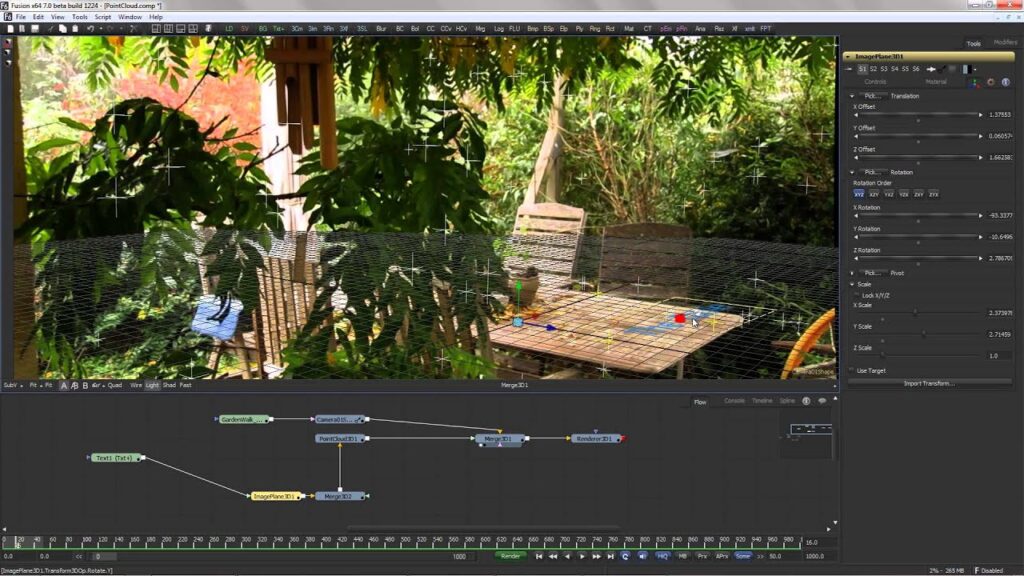
In November 2014, Blackmagic Design bought eyeon Software and did something nobody expected. It took Fusion, a node-based compositor that studios had been paying thousands for, and gave it away.
A lot of people assumed it was a stunt. Twelve years later, Fusion is still free, and it is still one of the best compositors you can get without a purchase order.
What the 2014 giveaway actually was
Blackmagic split Fusion 7 in two. The free version did the compositing. The paid Studio version added optical flow tools, stereoscopic 3D, third-party OFX plugin support and network rendering across a render farm.
That split is the same one Blackmagic uses today. It is also why the free version was never crippled in the way free software usually is. The node graph, the 3D system, the keyers and the tracker were all in there from day one.
Where Fusion lives now
Fusion is no longer a separate download for most people. It is a page inside DaVinci Resolve, sitting next to the edit, color and audio pages. Install the free Resolve and you have it.
The standalone app still exists for compositors who want Fusion on its own. Fusion Studio 21.0 shipped in May 2026 and 21.1 followed on September 9, 2026. A perpetual license is 295 dollars, and point updates are free once you own it.
What the free version gives up
Two limits matter in practice. Images cap out at 16K by 16K, and there is no network rendering. Unless you are working on large format plates or running a farm, neither one will stop you.
What is new in Fusion 21
- The Krokodove toolset is now built in, adding more than 70 motion design tools, with another 25 arriving in 21.1
- Deep images can be color corrected natively through the dColorCorrector node
- Cryptomatte works in the 3D renderer, so per-object mattes come out of the render rather than being rotoscoped back in
- Hydra 2 support brings USD rendering in line with the rest of the industry
- Relight and Depth Map run about six times faster
- Lottie and OGraf animation formats are supported, and Text+ handles colored fonts and emoji
Why this still matters
Node-based compositing used to be the dividing line between hobbyists and working artists. The software cost real money, so learning it meant either paying or pirating.
That line is gone. Someone can learn the same graph-based workflow a Nuke artist uses, on a laptop, for nothing. Fusion is not the only free option either. We rounded up the rest in our guide to free node-based compositing tools.
If you want to see where the paid end of the market has gone, our write-up on Nuke 17.1 covers the features studios are paying for in 2026.