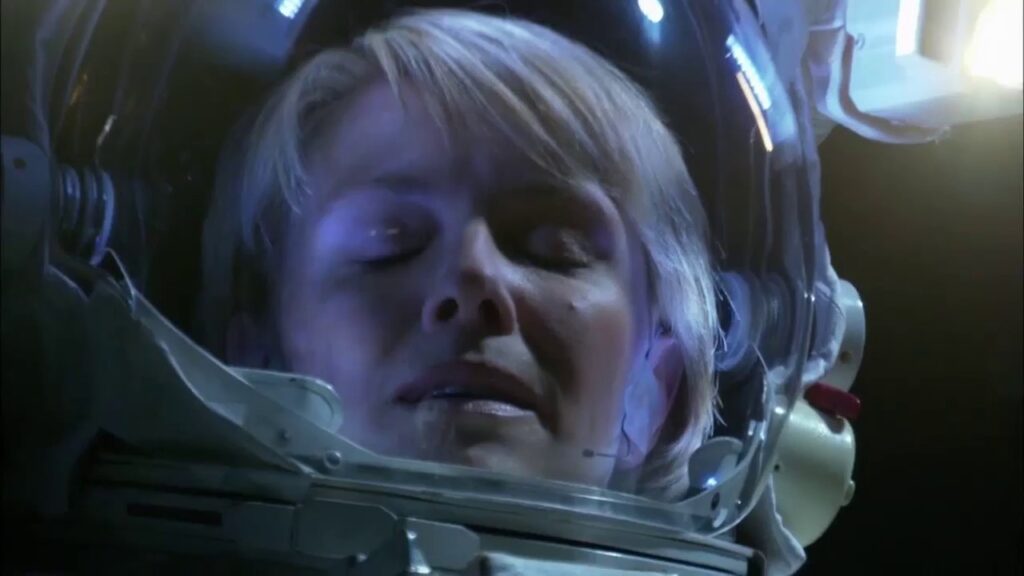
On June 2, 2026, Amazon MGM Studios quietly killed the new Stargate series. No trailer, no teaser, not even a cast. Just a writers room that ran for twenty weeks, a London shoot booked for the fall, and then nothing. It is the fourth time since 2009 that a Stargate revival has died before anyone outside the production saw a frame.
So this feels like a good moment to look back at the show that started it all. Stargate SG-1 ran ten seasons on a television budget and produced some of the best sci-fi effects work of its era, most of it out of Vancouver, much of it built on tools that would look almost quaint today.
What Amazon actually cancelled
The show was never really a reboot. Martin Gero, who wrote for Stargate Atlantis before creating Blindspot, was running it as a continuation. His team treated the existing 350-plus episodes as canon and used GateWorld’s Omnipedia as a reference while breaking stories. Brad Wright and Joseph Mallozzi were executive producing. Michael Shanks was set to return as Daniel Jackson.
The crew list was the part that got VFX people paying attention. Nathan Crowley, who won the Academy Award for Wicked and designed most of Christopher Nolan’s films, was production designer. Mohen Leo, an ILM veteran from Rogue One and Andor, was visual effects supervisor. Filming was set for London in fall 2026, at roughly eight to ten episodes per season.
Then it was gone.
Theories on why it died
The official line: not broad enough. Amazon executives reportedly worried Gero’s version would not reach past the existing fanbase, which made the budget hard to justify. Mallozzi pushed back publicly, saying the team was “ever mindful of creating a show that would have broad appeal,” and that budget was not the sticking point.
The executive shuffle. This is the theory that holds up best. The series was greenlit under television head Peter Friedlander, with executives Nick Pepper and Matt King championing it internally. Both Pepper and King left the studio. Genre and worldbuilding series moved to Blair Fetter in February 2026. Four months later the show was dead. Projects rarely survive losing every champion who bought them.
The London math. A Crowley-designed, ILM-supervised sci-fi series shot in London is not a cheap show. Streamers spent 2025 and 2026 trimming exactly that tier of series. Even if budget was not the stated reason, it is the number sitting under every other reason.
The legacy problem. Amazon hinted it might restart the project with a different showrunner bringing a “fresh perspective.” Read that next to the broad-appeal note and it suggests the studio wanted something less tied to canon. Gero’s whole pitch was respecting canon. Those two ideas cannot share a writers room.
The latest news
Brad Wright spoke about it again on September 16, 2026. He had written his own pilot script after finishing Travelers, set years after the events of Continuum and mixing legacy characters with new ones. “MGM seemed excited, but obviously the timing could not have been worse,” he said. “I can only presume Amazon didn’t like it.” Wright says he has moved on, though he has not ruled out developing another series later.
Michael Shanks reacted with a flat “Yep. They did that,” then pointed fans toward petitions. Wright’s public note on Gero’s version was short: “Martin and his team were doing amazing work and I wish the world got to see it.”
Meanwhile the back catalog is doing fine. As of late 2026 all ten seasons of SG-1 stream on MGM+, Netflix and Prime Video, with free ad-supported runs on Pluto TV and Comet TV, and Atlantis turned up free on YouTube in September. The audience clearly did not go anywhere.
How SG-1 actually made its effects
Here is the fun part. The single most recognizable effect in the franchise, the kawoosh, is mostly water.
The team fired an air cannon into a five foot cube tank of water, shot it from multiple angles, then added Sapphire Sparks elements for the glow and blended the plates with CG. That unstable vortex punching out of the gate and snapping back is a practical element dressed up digitally. Bruce Woloshyn and animator Marc Roth at Rainmaker passed 300 event horizon shots in the early seasons before they stopped counting.
The pilot leaned practical in other places too. The death glider was a Styrofoam miniature shot on a motion control rig by John Gajdecki’s team, mostly out of his own studio in Toronto. Matte paintings handled the location extensions. The original cut of “Children of the Gods” carried more than 240 effects shots, and the live action was shot on 16mm film. Season four’s “Nemesis” was the first episode shot entirely on 35mm, which is also the episode where the Replicators showed up and the shot count jumped again.
Newtek LightWave 3D
Stargate came up in the Vancouver sci-fi television scene of the late nineties, and that scene ran on LightWave 3D. NewTek’s package came out of the Amiga Video Toaster and became the default for shows that needed spaceships on a weekly schedule. Babylon 5, Star Trek Voyager, seaQuest DSV and later Battlestar Galactica all leaned on it for the same reason: it modeled and rendered hard-surface geometry fast, on hardware a television budget could afford.
LightWave stayed in the Stargate toolkit through the whole run. When Atlantis visual effects supervisor Mark Savela laid out the pipeline in 2008, the list was Photoshop, Maya and RenderMan on the 3D and rendering side, plus LightWave, Combustion, Fusion, Inferno and After Effects. Different vendors favored different tools. Atmosphere Visual Effects, the Vancouver shop that handled SG-1 seasons eight through ten and all five seasons of Atlantis, was a LightWave house.
Compositing in the early Rainmaker years ran on Discreet Logic’s Inferno, on a Silicon Graphics Onyx 2. Crews were tiny. Woloshyn described the underwater sequence in “Descent” as three people, supervisor Michelle Comens, 3D animator Tom Brydon and himself, working about six weeks from storyboards to final. The biggest shots in the show might get six artists.
From 2005, starting with SG-1 season nine and Atlantis season two, the production opened its own in-house effects department at The Bridge Studios in Vancouver. Outside vendors stayed in the mix: Atmosphere, Image Engine, CIS Vancouver, Darkroom Digital and Spin West. Savela’s team tracked nine or ten episodes in various stages at once on whiteboards, at roughly 50 effects shots per episode. His summary of the job: “Faster, cheaper, better, do all three.”
One footnote worth the irony. The longest continuous effects shot in the franchise, one minute and twenty seconds following naquadah-enhanced missiles from the Apollo down to the surface of Asuras, is in the Atlantis episode “First Strike.” It was written by Martin Gero.
What an episode cost
Showtime did not hedge. The network committed to 44 episodes up front, which is the only reason Richard Dean Anderson took the part. The two-hour pilot came in around $7.5 million.
After that, regular episodes ran about $1.3 million each in the early seasons, climbing toward roughly $2 million per episode by season ten, partly because the Canadian dollar moved against them. For comparison, that is real money for syndicated-era sci-fi television and still a fraction of what a single streaming episode costs today.
The premiere landed on Showtime on July 27, 1997, pulling around 1.5 million households, the network’s highest series premiere at the time. Sci Fi Channel took over first-run episodes from June 7, 2002. The series ended after season ten, with the last episode airing June 22, 2007, followed by two direct-to-DVD films in 2008.
Cast and crew
Brad Wright and Jonathan Glassner created the series. Robert C. Cooper took over as showrunner from season seven. Joseph Mallozzi and Paul Mullie wrote a huge share of the back half. Peter DeLuise and Martin Wood directed much of it.
On camera: Richard Dean Anderson as Jack O’Neill, Michael Shanks as Daniel Jackson, Amanda Tapping as Samantha Carter, Christopher Judge as Teal’c, and Don S. Davis as General Hammond. Corin Nemec joined as Jonas Quinn in season six. Ben Browder, Beau Bridges and Claudia Black came aboard for the final two seasons as Cameron Mitchell, Hank Landry and Vala Mal Doran.
On the effects side, James Tichenor supervised most of the run, with Michelle Comens and later Mark Savela carrying it through Atlantis and Universe.
The awards it never quite won
SG-1 picked up eight Primetime Emmy nominations for Outstanding Special Visual Effects for a Series and won none of them: “Children of the Gods” in 1998, “Nemesis” in 2000, “Small Victories” and “Exodus” in 2001, “Enemies” and “Revelations” in 2002, “Lost City” in 2004, and “Reckoning” in 2005.
It did take home Leo Awards for visual effects on “Revelations” in 2003 and “Lost City, Part 2” in 2005, plus two VES nominations. Losing eight straight Emmys while doing 50 shots an episode on a cable budget is its own kind of achievement.
Watch the trailer
Where to get the series
If you want it on a shelf rather than at the mercy of a licensing deal, the full run is still in print. The Stargate SG-1: The Complete Series Collection on Blu-ray covers all ten seasons, and there is a DVD complete series set if you would rather not pay for the upscale. And for those into classic visual effects: the early seasons were finished for standard definition on 16mm, so the high definition transfers can be uneven depending on how much of a shot was composited.
This post contains Amazon affiliate links. We may earn a small commission on qualifying purchases at no extra cost to you.
Bottom line
Stargate SG-1 worked because the effects team treated limits as a design problem. A water tank, a Styrofoam glider, LightWave scenes rendering overnight, and a compositor with six weeks and two colleagues. That is how you get 214 episodes of a space opera on cable money.
The 2026 version had ILM pedigree, an Oscar-winning production designer and a London stage. It never got to a single shot. Sometimes the constraint is the budget, and sometimes it is the org chart.
Amazon and their bean counters really dropped the ball on this one. In the end, after sitting on the Stargate IP, hopefully they’ll look back and realize the mistake they’ve made.
Leave a Reply