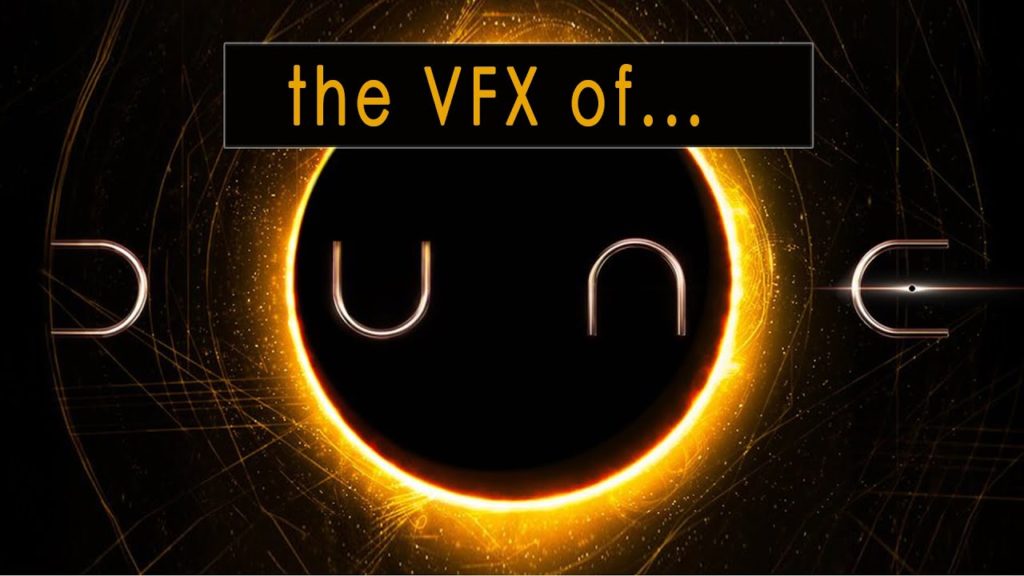
Denis Villeneuve’s Dune arrived in 2021 with divided reviews and near-universal agreement on one point. The visual effects were extraordinary, and they were extraordinary in an unusual way.
Who made it
DNEG led the visual effects under production VFX supervisor Paul Lambert. Gerd Nefzer ran special effects on set. That pairing is the key to the whole film.
The work won the Academy Award for Best Visual Effects at the 94th Oscars in March 2022. Lambert, Nefzer, Brian Connor and Tristan Myles took the statue.
The approach: shoot it if you can
Villeneuve’s instinct was to capture as much as possible in camera and use digital work to extend rather than replace. Desert location photography in Jordan and Abu Dhabi gave the film real sand, real light and real heat haze.
That sounds like a small decision. It is not. Digital sand is one of the hardest things to render convincingly, because a dune has both enormous scale and grain-level detail, and the eye checks both.
Starting from a real plate means the base is already correct. The digital work then only has to match something rather than invent it from nothing.
The ornithopters
The dragonfly-winged aircraft are the film’s signature design and a good example of the method. Partial practical builds were made for the interiors and for anything the actors touched, with the flight work handled digitally.
The wing motion is the part that sells them. It is fast enough to blur, which both looks right for the insect reference and conveniently hides detail.
The sandworms
Fully digital, and mostly a problem of scale. Nothing on screen tells you how big something is unless you give the audience a reference, so the shots are built around objects of known size next to the worm.
Slower movement helps too. Very large things appear to move slowly, and animating a worm at a speed that felt correct would have made it read as small.
Then they did it again
Dune: Part Two arrived in 2024 with the same team and won Best Visual Effects again, at the 97th Oscars in March 2025. Lambert and Nefzer were back, alongside Stephen James and Rhys Salcombe.
Back to back wins in that category are rare. The sequel pushed further into worm riding and the black and white Giedi Prime sequence, which was shot with infrared cameras rather than graded in post.
For more on reading this kind of work, see our guide to what a VFX breakdown is and what to look for.