
If you’ve been circling job boards wondering whether visual effects is still a career worth chasing, here’s the short answer: it is, but the job looks different than it did even two years ago. Between studio consolidation, a wave of hiring after Technicolor’s collapse, and AI tools eating into the most repetitive parts of the pipeline, 2026 is a strange and genuinely opportunity-rich moment to break into VFX. Here’s what’s actually happening, who’s hiring, and what you need to know before you apply.
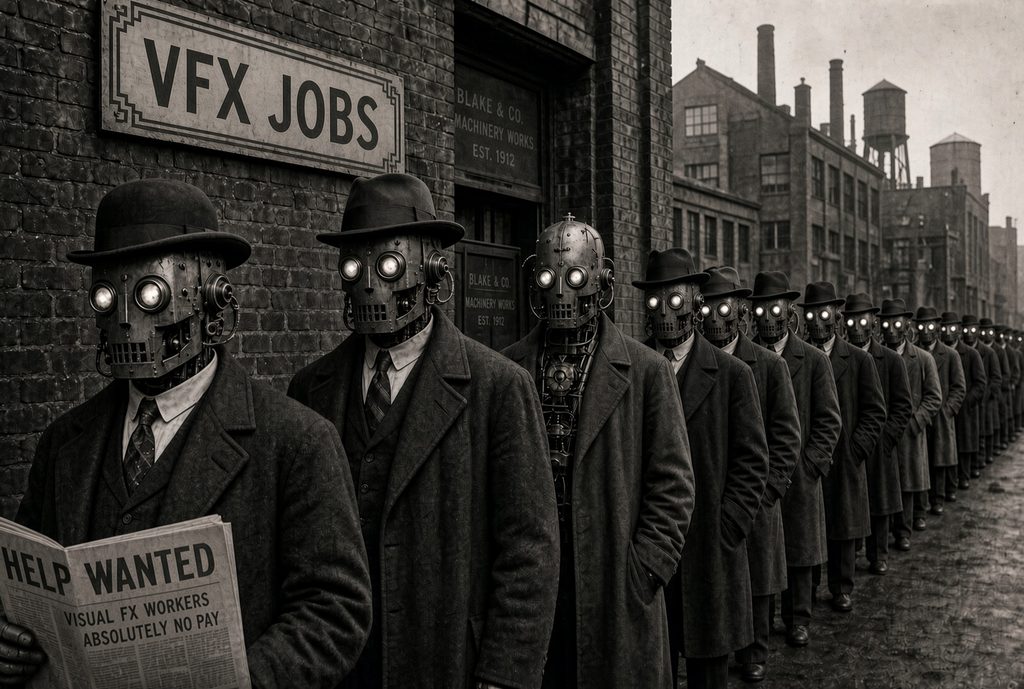
The state of VFX hiring right now
Early in 2026, Technicolor’s shutdown sent shockwaves through the industry, taking MPC, The Mill, and Mikros Animation’s parent company down with it. That sounds like bad news for job seekers, and for the artists caught in the transition, it was rough. But the fallout triggered a hiring wave instead of a hiring freeze. Rodeo FX picked up Mikros Animation’s Paris and Montreal teams. Framestore brought on senior MPC veterans, including a VFX supervisor and animation supervisor who’d worked on major franchise films. Assemblage Entertainment absorbed roughly ten members of the Mikros India leadership team.
The upshot: talent is being redistributed across the industry rather than disappearing, and studios that are actively expanding are actively recruiting. That’s good news if you’re job hunting, but it also means the studios doing the hiring are pickier about who they bring on.
How AI is actually changing VFX jobs
Here’s the part everyone asks about first. AI is not replacing VFX artists, but it’s absolutely changing what the day-to-day job looks like. The clearest example: Foundry’s Nuke CopyCat tool was used on Dune: Part Two to recreate the Fremen’s blue-eye effect across roughly a thousand shots. About 40% needed zero cleanup after the AI pass, and compositors stayed fully in the loop reviewing, correcting, and retraining the model on the rest. That’s thousands of rotoscoping hours saved, but a human was still making every final call.
That’s the pattern across the industry right now: AI is soaking up the unglamorous, repetitive work, like semantic roto, cleanup, jump-cut repair, and shot-to-shot consistency, while judgment calls on performance, continuity, and final quality stay firmly with people. Tools like DaVinci Resolve’s neural engine and Adobe’s generative frame tools are accelerating post-production, not replacing the artists who decide whether the output actually works.
Labor protections are catching up too. SAG-AFTRA’s latest TV/theatrical agreement now requires studios to have “an articulable business reason” before scanning a performer, and it restricts how synthetic performers can be used in place of real ones. That’s a meaningful guardrail for anyone worried about being scanned out of a job.
The practical takeaway for job seekers: the artists in highest demand aren’t the fastest rotoscopers anymore. They’re the ones who understand AI-assisted pipelines well enough to supervise them, catch what the model gets wrong, and still deliver traditional artistry when there’s no shortcut available.
VFX studios hiring right now
These are major houses with active career pages where you can apply directly:
- Industrial Light & Magic (ILM): ilm.com/careers
- Weta FX: careers.wetafx.co.nz
- Framestore: framestore.com/careers
- DNEG: dneg.com/join-us
- MPC (Moving Picture Company): moving-picture.com/careers
- Digital Domain: digitaldomain.com/careers
- Sony Pictures Imageworks: imageworks.com/job-postings
- Rodeo FX: rodeofx.com/careers
- Method Studios: method.com/careers
Worth bookmarking too: the VES Job Board run by the Visual Effects Society, and JobVFX, a board built specifically for the industry. Both aggregate openings across dozens of studios that don’t always show up in a general job search.
Software and skills worth learning
If you’re building a portfolio, these are still the tools every reel gets judged against:
- Nuke: the industry-standard compositor, used at nearly every major studio
- Houdini: procedural FX, simulations, and increasingly the backbone of studio pipelines
- Maya: modeling, rigging, and animation
- ZBrush: digital sculpting for characters and creatures
- Unreal Engine: real-time rendering and virtual production, now standard on big-budget sets
- DaVinci Resolve: color, editing, and increasingly AI-assisted cleanup
On top of the software itself, get comfortable with AI-assisted workflows specifically: machine-learning roto and keying tools, generative cleanup, and model retraining loops like the one Foundry built into Nuke. Studios are actively looking for people who can supervise these tools, not just run them blindly.
Where to actually learn this stuff
A few training programs consistently show up in working artists’ resumes: Rebelway for Houdini and Nuke-heavy FX and compositing tracks, CG Master Academy (CGMA) for structured, mentor-led courses across the whole pipeline, and Escape Studios for a more traditional film-school route into VFX. None of these are cheap, so treat them as an investment: pick one specialization (compositing or FX simulation are the strongest bets right now) and go deep rather than sampling everything.
Gear that’s actually worth buying
A few tools make a real difference once you’re working long hours in Nuke or Houdini. A pressure-sensitive tablet beats a mouse for paint and roto work: the Wacom Intuos Pro is the standard choice. For 3D work, a 3Dconnexion SpaceMouse lets you navigate a Maya or Houdini viewport with one hand while your other stays on the keyboard. If you’re doing any color or edit work, the Blackmagic DaVinci Resolve Speed Editor speeds up trims and cuts dramatically. And if you’re still building compositing fundamentals, Ron Ganbar’s Nuke 101 and Alasgar Hasanov’s VFX Made Easy with Houdini are both solid, practical starting points.
This post contains Amazon affiliate links. We may earn a small commission on qualifying purchases at no extra cost to you.
Bottom line
The VFX industry isn’t shrinking, it’s reshuffling. Studios that survived the consolidation are hiring, AI is taking the grunt work off artists’ plates rather than their jobs, and the people getting hired are the ones who can pair traditional craft with comfort around AI-assisted tools. Pick your software, pick your specialization, build a reel, and start applying directly to the studios above.

Leave a Reply