Star Trek: Horizons was a fan film made largely by one person, Tommy Kraft, over about two years. It looked far better than its budget suggested, and the making-of below explains exactly how.
If you want a realistic picture of what a solo sci-fi pipeline looks like, this is a better teacher than most paid courses.
The pipeline in plain terms
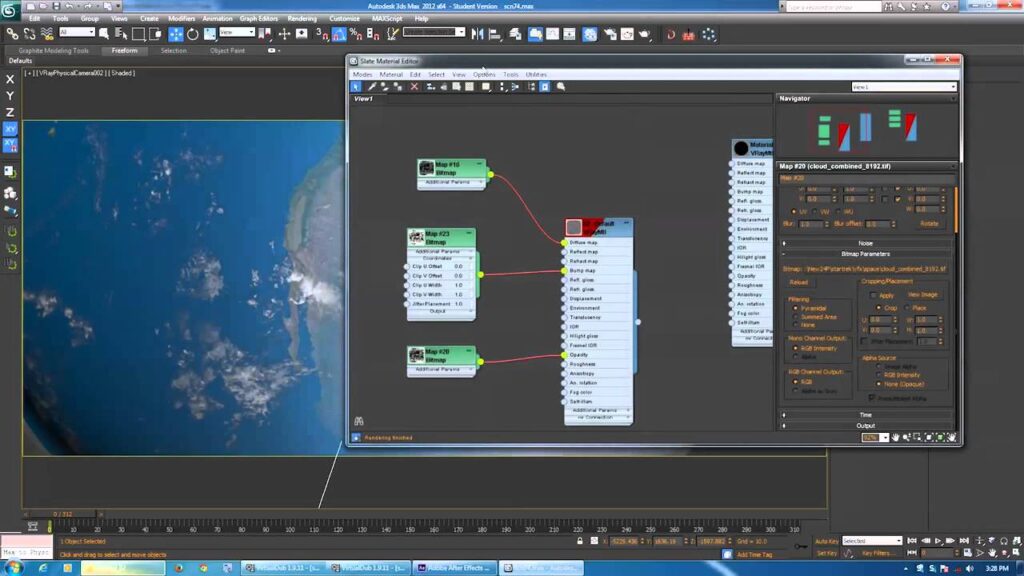
Three tools, each doing one job. 3ds Max builds and animates the ships and environments. V-Ray renders them. After Effects assembles the result into a finished shot.
That division is not unique to fan films. It is the same shape a facility uses, just with fewer people and no handoffs between departments.
Why space scenes are a good place to start
A space shot removes most of the hard problems at once.
- No camera tracking, because there is no live action plate to match
- No keying, no roto, no edge work against a moving background
- Lighting is usually one key source and some fill, not a complicated real world setup to replicate
- Black backgrounds hide an enormous number of sins
What is left is modeling, texturing, lighting and comp. Hard, but learnable, and each one gives visible feedback immediately.
Where the render passes matter
The single most useful idea in the video is that the render is not the finished shot. V-Ray outputs separate passes for diffuse, specular, reflection and depth, and those get recombined in After Effects.
That matters because it moves decisions out of the renderer. Want the hull reflections stronger? Turn up one layer in the comp. Doing it the other way means re-rendering, and a re-render on a home machine can cost a night.
The glue is the unglamorous part
Lens flares, chromatic aberration, a little grain, a slight camera shake. None of it is technically difficult and all of it is what makes a render stop looking like a render.
Real cameras have flaws. A perfect image reads as fake, which is why the last ten percent of a shot is usually spent adding imperfection back in.
Watch the finished film
Watching the breakdown and then the finished film in that order is the useful way round. You spot the seams you were just told about, which is the fastest way to learn to see them elsewhere.
If you are working out where to begin, our plain English guide to visual effects covers the vocabulary first.