Ask ten people what VFX means and you will get ten answers. Explosions. Aliens. “Everything that isn’t real.” None of those are wrong, exactly, but none of them tell you what actually happens between the camera rolling and the shot you see in a theater.
This is the plain English version. What VFX is, how a shot gets built, the techniques studios actually use, and which of the newer ones (LED volumes, AI compositing, Gaussian splatting) are real production tools versus conference demos.
The short answer
VFX stands for visual effects. It covers any image that is created, altered, or combined outside of what the camera captured on the day.
That includes the obvious stuff: dragons, spaceships, a city getting flattened. It also includes a huge amount of work you are never meant to notice. A boom mic painted out. A parking lot turned into a field. A modern stop sign removed from a 1970s street. Most VFX in a given film is invisible by design.
VFX vs SFX vs CGI
These three get used interchangeably and they should not be.
- SFX (special effects) happen in front of the camera. Practical rain, pyro, squibs, animatronics, prosthetics, wire work. If the crew built it or set it on fire on set, that is SFX.
- CGI (computer generated imagery) is imagery made in a 3D application. A CG creature, a CG car, a CG environment. CGI is one ingredient inside VFX, not a synonym for it.
- VFX is the umbrella. It includes CGI, plus compositing, cleanup, set extension, tracking, simulation, and the on-set work that makes all of it possible.
A useful rule of thumb: SFX is what the camera sees. VFX is what happens to the picture after that.
Where VFX actually happens
People assume VFX is a post-production department. It is really spread across the whole production.
Pre-production
Concept art sets the look. Previs turns the storyboards into rough animated 3D so the director can block a sequence before anyone books a stage. Techvis takes that further and works out the practical details: crane height, lens choice, how far the actor has to run.
Production
A VFX supervisor is on set collecting the data that post will need. Camera and lens metadata. HDRI light probes. Lidar or photogrammetry scans of the set. Color charts and grey balls. Miss this step and artists spend weeks reverse engineering information that took five minutes to capture.
Post-production
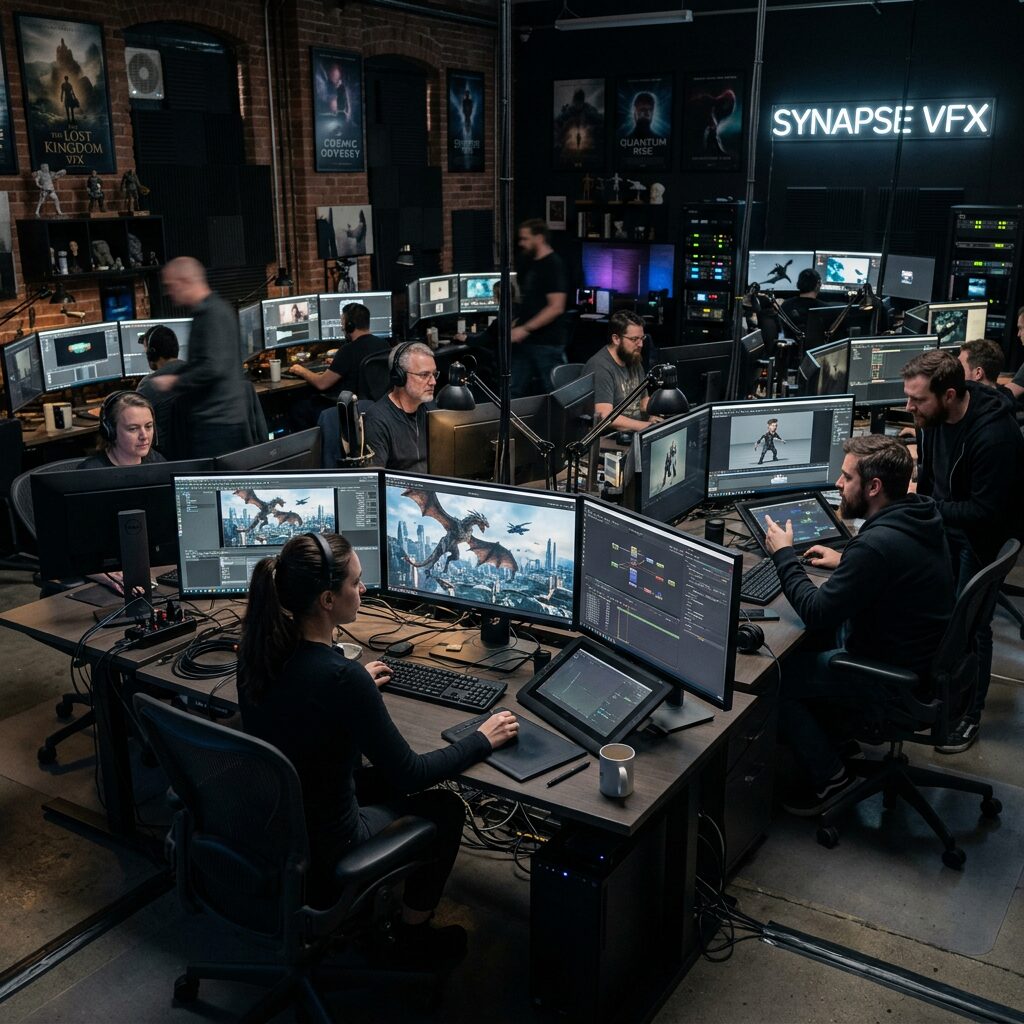
This is where most of the labor lives. Shots get tracked, rotoscoped, modeled, animated, simulated, lit, rendered, and composited. Then they get reviewed, kicked back, and done again. Iteration is the job.
The core VFX techniques
These are the foundations. The tools around them keep changing. The techniques themselves have been stable for a long time, and every newer method on this page still feeds back into them.
Compositing
Compositing is the final assembly. Live action plate, CG renders, matte paintings, smoke elements, lens artifacts, grain. All of it layered into one image that reads as a single photograph.
Most feature work is node based, in nuke. Broadcast and motion graphics lean on after effects or fusion inside davinci resolve. If you want to try it without spending anything, we rounded up the best free node-based compositing tools.
Keying (green screen and blue screen)
Shoot a subject against an evenly lit colored backing, then pull that color out to make everything behind it transparent. Simple in theory. In practice the hard parts are hair, motion blur, semi-transparent fabric, and green light spilling onto your actor’s face.
Rotoscoping
When there is no green screen, someone traces the subject by hand, frame by frame, to create a matte. Roto is unglamorous, enormous in volume, and traditionally the entry point into the industry. It is also the task machine learning has changed the most, which we get into below.
Matte painting and set extension
You build the first two stories of a street practically, then extend the skyline digitally. Modern matte painting is usually 2.5D or fully 3D so the camera can move through it. Our set extension coverage has examples from actual shows.
Match move and camera tracking
Before you can add anything 3D to a live action plate, you have to recreate the real camera in the computer. Same position, same lens, same movement. Get this even slightly wrong and the CG slides against the plate, and the audience feels it even if they cannot name it.
3D asset work: modeling, texturing, look dev
Building the thing itself. Geometry, surfacing, shaders, and then look development to make sure the asset holds up under the lighting conditions of the actual shots. Rigging and animation follow for anything that moves.
Simulation and FX
Fire, water, smoke, destruction, cloth, hair, crowds. Physics driven work where an artist sets up rules and forces rather than keyframing every piece. houdini dominates here for a reason, and the newest release added faster Voronoi fracturing plus readymade setups for things like fireworks.
Motion capture and performance capture
Recording an actor’s movement and mapping it onto a digital character. Performance capture adds the face and hands, which is what separates a puppet from a performance.
Digital doubles, de-aging, and digital makeup
Digital doubles stand in for actors in stunts and wide shots. De-aging and face replacement have moved largely to machine learning approaches. Digital makeup is the quiet version of the same toolset, like the spider bite removed from Kaitlyn Dever in The Last of Us. Worth noting: work built on a performer’s likeness now carries consent and contract obligations, not just technical ones.
Lighting and rendering
CG has to be lit to match the plate, then rendered out in passes the compositor can control separately. Path tracers like arnold, v-ray, redshift, and karma handle the heavy work. AI denoisers such as Intel Open Image Denoise and NVIDIA OptiX now let studios render far fewer samples and clean up the noise afterward, which cuts render time and cost significantly.
The newer techniques changing the work right now
Virtual production and LED volumes
Instead of a green screen, the actors stand inside a wall of LED panels playing back a real time 3D environment. The camera is tracked, so the perspective on the wall shifts correctly as the camera moves. This is called in-camera VFX, or ICVFX.
The payoff is real interactive light on faces, costumes, and chrome, plus a director who can see the shot on the day. The catch is cost, moire and resolution limits, and the fact that the environment has to be finished before you shoot instead of after. The Mandalorian made the technique famous, and ILM’s work on it is still the best entry point. We also looked at whether LED walls will replace green screen. Short version: they will not. They are a different tool for different shots.
Real time engines for final pixels
unreal engine 5 has crossed from previs tool into finished work. Nanite handles enormous geometry detail and Lumen handles dynamic global illumination, which together make real time output good enough for broadcast, commercials, and mid-budget hero shots. Heavy path traced feature work still goes to traditional renderers, but the line keeps moving.
Gaussian splatting
This is the big one from the last two years. Instead of reconstructing a scene as polygons, 3D Gaussian splatting represents it as millions of soft, oriented blobs with color and transparency. Photograph or scan a location, train a splat, and you get a photoreal 3D scene you can fly a camera through at high frame rates, with none of the modeling work. For the full walkthrough, see our guide to what 3D Gaussian splatting is and how it works.
It stopped being a research toy and became a pipeline feature fast:
- nuke 17, released in February 2026, imports .ply and .splat data and renders it with a dedicated SplatRender node that supports motion blur and depth output.
- houdini 22, released in July 2026, made splats native. You can train them, relight and render them in Karma, and (unusually) rig and animate them.
- OpenUSD added a schema for them, so splats travel between applications like any other asset.
The version worth watching is 4D Gaussian splatting, which adds time. Framestore, working with Infinite Realities, used it on Superman for the holographic messages from Kal-El’s Kryptonian parents. The performance was captured volumetrically, then reframed and effectively re-shot from any angle in post. That is a genuinely different way to work than a digital double.
Where it shows up today: set extensions, environment reference, previs, background plates, and anything that needs a real location the production cannot afford to rebuild. Where it struggles: relighting, editing geometry, and clean integration with traditional assets. Both of those are closing.
AI and machine learning in the pipeline
Forget the headline argument for a second. The AI that has actually landed in VFX is unglamorous and specific:
- Trained shot-specific models. CopyCat in nuke lets a compositor train a small network on a handful of hand-done frames, then apply that same fix across the rest of the shot. Nuke 17 added BigCat for training across much larger sets of images, which suits sequels and long-running shows.
- Roto and matte assistance. Segmentation models now produce a usable starting matte in seconds. Artists still clean it up, but the first pass is close to free.
- Denoising and upscaling. Already covered above, and probably the single biggest cost saving on this list.
- Face work. De-aging and face replacement are now largely ML driven rather than hand animated.
- Generative tools for concept and previs. Used widely to explore looks early. Rarely used for final pixels in studio work, for both quality and rights reasons.
The effect so far is compression of the middle of the pipeline, not elimination of the artist. We dug into what that means for hiring in VFX jobs in 2026, and into the loudest version of the argument in our piece on whether Sora makes VFX artists obsolete.
Markerless motion capture
Capture used to mean a dedicated stage, a suit covered in markers, and a ring of infrared cameras. Computer vision systems now solve body motion from ordinary video cameras, no suit required. It is not a full replacement for a high end stage yet, but it puts capture within reach of small productions and makes on-location capture practical.
OpenUSD as the connective tissue
Universal Scene Description started at Pixar and is now the industry’s interchange standard, governed by the Alliance for OpenUSD with Pixar, Adobe, Apple, Autodesk, and NVIDIA involved. It matters because a shot might pass through maya, houdini, blender, unreal engine, and nuke before it is done. USD is what keeps that from being five separate export headaches. Nuke 17 rebuilt its entire 3D system around it.
Cloud rendering
Render farms used to be overflow capacity. For indie and mid-tier shops they are now the whole infrastructure. GPU prices are volatile, cloud GPU rates have dropped, and AI denoising cut the number of samples a frame needs. Below a few hundred render hours a month, owning hardware is getting hard to justify.
Quick reference: technique, purpose, tools
| Technique | What it does | Common tools |
|---|---|---|
| Compositing | Assembles every element into the final image | nuke, after effects, fusion |
| Keying | Removes a green or blue backing | nuke, after effects |
| Rotoscoping | Creates mattes by hand where keying cannot | nuke, silhouette, mocha |
| Match move | Rebuilds the real camera in 3D | 3dequalizer, syntheyes, pftrack |
| Modeling and look dev | Builds and surfaces CG assets | maya, blender, zbrush, substance |
| Simulation | Fire, water, destruction, cloth, crowds | houdini, embergen, blender |
| Rendering | Turns 3D scenes into images | arnold, v-ray, redshift, karma |
| Virtual production | Real time environments on LED walls | unreal engine, disguise |
| Gaussian splatting | Photoreal captured 3D scenes | nuke 17, houdini 22, postshot |
| ML assistance | Shot-specific fixes, roto, denoise | CopyCat, BigCat, OptiX, Open Image Denoise |
How one VFX shot actually gets made
Here is the usual path for a single shot, start to finish.
- Turnover. Editorial locks the shot and hands the plate to the VFX vendor with any on-set data.
- Plate prep. Cleanup, stabilization, removing rigs and markers.
- Match move. The camera is solved and the set is roughly rebuilt in 3D.
- Roto and paint. Mattes for anything CG has to go behind.
- Layout and animation. Assets are placed and performed.
- FX simulation. Anything physics driven is run and cached.
- Lighting and rendering. Matched to the plate, output in passes.
- Compositing. Everything is assembled, graded, and grained.
- Review. Supervisor and client give notes. Back to step five. Repeat until approved.
- Final delivery. Rendered at delivery spec and handed back to editorial.
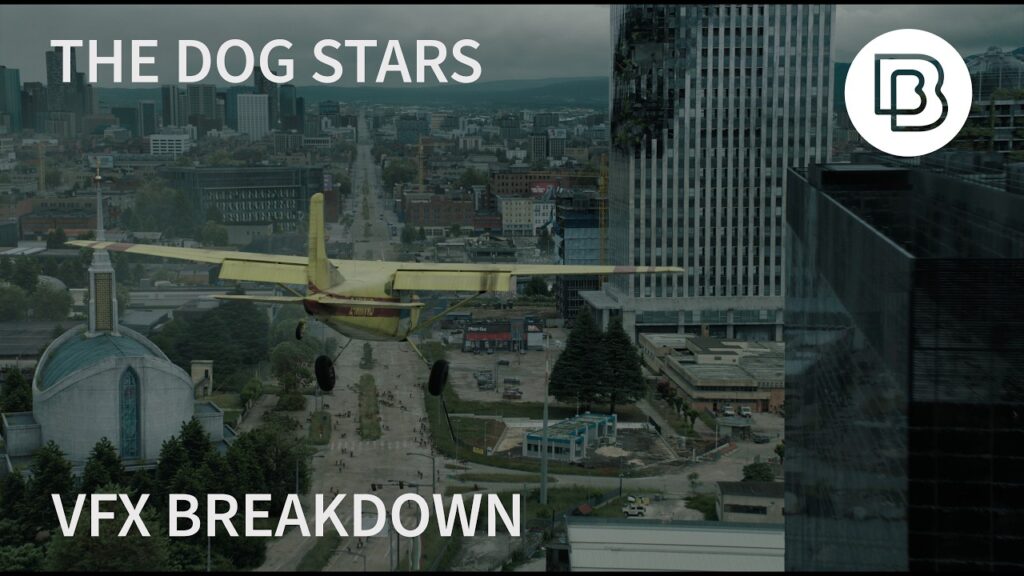
A straightforward shot might take a few days. A hero creature shot can run for months and pass through dozens of artists. If you want to see the result of that process broken apart, that is exactly what a VFX breakdown is for.
Common questions
Is VFX the same as CGI?
No. CGI is computer generated imagery, one component. VFX is the whole discipline, including plenty of work that involves no 3D at all.
Is AI replacing VFX artists?
Not so far. It is absorbing repetitive middle-pipeline tasks like roto, cleanup, and denoising. That has real consequences for junior roles, since roto was traditionally how people got in. Judgment work, shot supervision, and client-facing iteration are not being automated.
Do LED volumes replace green screen?
No. They are excellent for reflective surfaces, driving scenes, interactive light, and environments you can finish in advance. Green screen is still better for large-scale destruction, full CG environments, and anything where the background is undecided when you shoot.
What should a beginner learn first?
Compositing, before anything else. It teaches you how images are actually put together, and every other department eventually hands its work to a compositor. blender is a free way to learn the 3D side. davinci resolve gets you a node compositor at no cost.
Why does bad VFX look bad?
Usually it is not the asset. It is integration. Wrong lighting direction, missing lens defocus, no motion blur, no grain, a camera solve that drifts. The brain catches those long before it questions the model.