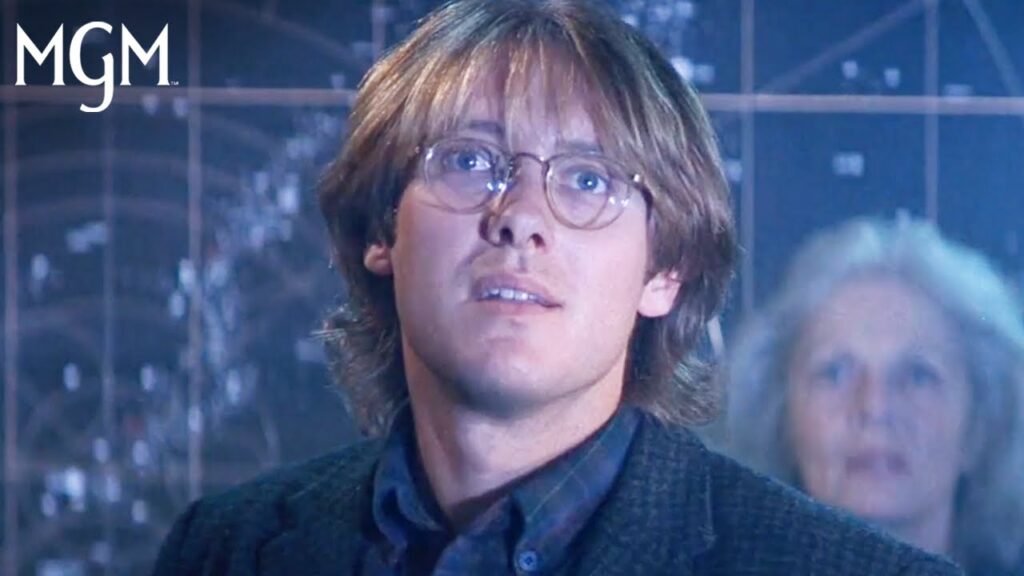
Amazon, in their infinite wisdom, have handed the Stargate franchise to WandaVision creator Jac Schaeffer. The news broke on October 9, 2026. It comes four months after Amazon dropped Martin Gero’s version, a series built by veterans of the original shows, and cancelled that reboot outright.
It is not known if the original writers or cast will make appearances on this show. Will it even follow Stargate canon? Nobody knows. Everything is up in the air, and time will tell.
Stargate came to Amazon as part of a package deal. Amazon agreed to buy MGM for $8.45 billion in May 2021 and closed the deal in March 2022, picking up the whole Stargate library along with the rest of the MGM catalog. More details below.
What we know so far
- Schaeffer is developing the series under the three-year overall deal she signed with Amazon MGM Studios in February 2026. It is the first project under that deal.
- A writers room is expected to open soon.
- Joby Harold and Tory Tunnell of Safehouse Pictures stay on as executive producers. Both were attached to Gero’s version too.
- Neither side has commented, and there is no series order yet. This is development, not a green light.
- Nobody has said whether it is a fresh reboot with new characters or a continuation of SG-1, Atlantis and Universe.
Variety broke the story and Deadline confirmed it.
Why Amazon cancelled the first reboot
Gero’s series got a series order from Prime Video in November 2025. It ran a 20-week writers room and was in pre-production in the UK when Amazon pulled it in June 2026. The reported reason: executives worried it would not reach past the existing fanbase.
We covered the cancellation, the theories behind it, and how the original show made its effects in Stargate SG-1 VFX: The Software, the Budgets, and the Reboot Amazon Killed.
Read that broad-appeal note next to this hire and the plan looks pretty clear. WandaVision was a mainstream hit, the most watched title across the big US streamers the month it premiered. Amazon wants that audience, not just the convention crowd.
Who is Jac Schaeffer
Schaeffer wrote and directed the 2009 sci-fi romance TiMER and co-wrote the story for Black Widow. She created WandaVision and its spin-off Agatha All Along for Disney+, ran both, and directed three episodes of Agatha. She is also an executive producer on VisionQuest, the third show in that run, which Terry Matalas is running and which is due on Disney+ this month.
How the original Stargate was made
Before the TV shows there was the 1994 film. Roland Emmerich directed, Dean Devlin co-wrote and produced, and the budget was $55 million. The studio had guessed it would cost closer to $100 million. It grossed about $196.6 million worldwide. The Creek Mountain base set, gate included, was built inside the old Spruce Goose dome in Long Beach.
The effects were split. Kit West carries the visual effects supervisor credit. Jeffrey A. Okun ran the digital work for Kleiser-Walczak. Emmerich did not trust computer graphics at first and wanted miniatures. What won him over was a test where the team cut CG death gliders into dailies next to his miniature ones. He picked a digital glider as his favorite, because it was the first one that actually moved like it was flying.
The gate effect was a water tank
Okun’s crew found the look in a garage. They filled a three by three foot plexiglass tank with water and iced tea mix and spun it with a 2×4 on an electric drill. The swirl that settled out became the “strudel” behind the gate. With the camera on its side, the underside of the water surface read as a rippling mirror. That became the event horizon.
The splash came from an air mortar fired through a one inch pipe. At 26 PSI it lifted the whole tank of water out and dumped it on DP David Stump. At 2.1 PSI it gave them the shot in the film. Emmerich had fired Okun that same day. He watched the footage and un-fired him.
On set, lasers built into the gate threw a grid of light so the compositors knew exactly where the water plane sat. The TV show kept the idea. The SG-1 kawoosh is also water, fired by an air cannon into a tank.
The rest of the film
- The trip through the wormhole took 30 days to render. The star streaks at the end came free off a demo reel by artist Doc Bailey.
- The five mechanical helmet morphs took almost nine months. The off-the-shelf morphing software failed, so the team wrote its own.
- The pyramid ship was a miniature.
- The desert city had two real towers. The rest were miniatures shot on bluescreen in the same desert, so the light matched.
- The film was recut late and 66 effects shots were added in the final week. One artist, Mitch Drain at Cinema Research Corporation, turned them around on a Quantel Domino.
Budgets, from the film to the reboot
- Stargate (1994): $55 million. Kurt Russell reportedly took $7 million of that.
- Stargate SG-1 pilot: about $7.5 million.
- SG-1 episodes: about $1.3 million early on, climbing past $2 million by the end. The Hollywood Reporter has put the figure at $2.2 million.
- Stargate Universe: over $2 million an episode, according to star Robert Carlyle.
- WandaVision: reportedly around $225 million for nine episodes.
- Agatha All Along: Marvel’s least expensive show to date, confirmed by Marvel TV head Brad Winderbaum. That puts it under Echo, reported at about $8 million an episode.
- MGM, Stargate included: $8.45 billion.
That last line is the one to watch. Amazon paid a lot for this library. It wants a Stargate show that performs like WandaVision on a bill closer to Agatha’s.
How the TV shows built their space battles
SG-1 and Atlantis started out sending shots to Vancouver vendors like Rainmaker, Atmosphere and Image Engine. From 2005, starting with SG-1 season nine and Atlantis season two, the production ran its own in-house effects department at The Bridge Studios in Vancouver under supervisor Mark Savela, with outside vendors for overflow. That setup carried through both seasons of Universe.
Some of the big ones:
- The battle over Antarctica, SG-1 “Lost City” (2004). Earth’s first big fleet fight, half in space and half in the atmosphere. Emmy nominated.
- “No Man’s Land,” the Atlantis season three premiere. The Daedalus and the Orion take on two Wraith hive ships. It won the Gemini for best visual effects, shared by Savela’s team, Rainmaker and Atmosphere.
- “Adrift,” the Atlantis season four premiere. The city drifts through an asteroid belt while a fleet of puddle jumpers clears a path. 2008 Emmy nomination. Savela has called its spacewalk one of his favorite shots.
- “First Strike,” Atlantis. The longest continuous effects shot in the franchise, 1 minute 20 seconds, following missiles from the Apollo down to Asuras. Martin Gero wrote it after telling the effects team he was going to write a minute-long shot.
- “Space,” Stargate Universe. An alien craft attacks Destiny. Image Engine did the work and earned a 2010 Emmy nomination.
- “Awakening,” Universe season two. Destiny meets an Ancient seed ship, and the fully CG Ursini aliens debut. 2011 Emmy nomination.
The tools changed a lot over that run. Savela has said an active gate used to be a locked-off shot with clean plates. By Universe they were shooting about 75 people coming through the gate on handheld cameras, which you cannot treat as a one-off specialty shot.
WandaVision and Agatha: Schaeffer’s effects track record
WandaVision
WandaVision was Marvel’s first Disney+ series and it spent like it. Tara DeMarco, a longtime Flame artist and supervisor from The Mill, supervised the effects with VFX producer James Alexander. About 20 vendors worked on it. Digital Domain, ILM, MARZ, Rodeo FX, Framestore, Screen Scene and Lola were among the main ones.
The early sitcom episodes leaned practical on purpose. The black and white magic used puppeteered props on wires, in-camera cuts and rewind tricks from the Bewitched era. Modern tools mostly cleaned up wires and smoothed cuts. Episode one was shot in front of a live studio audience and finished as a 4:3 black and white master.
Vision was the heavy lift. Paul Bettany wore makeup, a bald cap and tracking dots, and vendors matchmoved his face to lay CG panels over it. MARZ did black and white Vision in the opening episodes. Framestore did the color blossom transition, part of its 99 shots, based on how period film was actually printed. Rodeo FX built the Hex barrier and the shot where Vision is pulled apart, with layers of cables and wires generated in Houdini.
Agatha All Along
Agatha went the other way. Brad Winderbaum confirmed it as Marvel’s cheapest show and said it had far less CG than anything they had done before. Mostly practical effects.
Digital Domain was the main vendor, with Michael Melchiorre supervising for DD and Kelly Port as production VFX supervisor. The brief was old school 2D compositing. The witches’ magic was built in Nuke from particles, Tesla coil and lightning elements, using the Higx Point Render plug-in. DD also did the broom chase, the desiccation effects, and Agatha’s death and ghost. Its previs team delivered about 740 shots across 16 sequences.
More studio breakdowns like these are collected in our guide to VFX breakdowns.
What this means for Stargate’s effects
Strip away the Marvel branding and Schaeffer’s two shows say something useful. WandaVision spent big. Agatha proved she can make a show look good on a tight bill by going practical first and saving CG for the shots that need it.
That is Stargate’s tradition too. The most famous effect in the franchise is a tank of water. The TV shows pulled off space battles on cable money with a small in-house team in Vancouver. If Schaeffer leans into that, fans could get more than they expect.
The worry runs the other way. Gero’s whole pitch was respecting canon. A showrunner hired for broad appeal may not. The #SaveStargate fan campaign says it is cautiously optimistic, mostly because some of Gero’s producers are staying on.
Bottom line
Amazon now has a showrunner with a mainstream hit, a cheaper follow-up and a taste for practical effects. What it does not have yet is a green light, a cast, or an answer on canon. Hopefully this time they actually let somebody walk through the gate.
Leave a Reply