On Tuesday, October 6, Paramount Skydance is set to close its $110 billion purchase of Warner Bros. Discovery. The same day, the parent company changes its name to Skydance Corporation. Its stock moves from the ticker PSKY to SKYD on the New York Stock Exchange.
That puts two of the oldest studios in Hollywood under one owner. Paramount dates to 1912. Warner Bros. was founded in 1923. Between them they released Titanic, The Matrix, Forrest Gump, The Lord of the Rings, Interstellar, Gravity and Dune. Films they released, along with New Line Cinema, have won the Academy Award for visual effects 20 times since 1978.
David Ellison says both names stay on the films. “We never wanted a new corporate identity to diminish, alter or overshadow either one,” he said this week. Paramount, Warner Bros., DC, HBO, CBS, CNN and Nickelodeon all keep their own brands under the Skydance umbrella.
Budgets below are reported production budgets, before marketing. Videos are official uploads from the studios.
The deal at a glance
| Item | Detail |
|---|---|
| Buyer | Paramount Skydance (Skydance Corporation from October 6) |
| Target | Warner Bros. Discovery, the whole company |
| Price | $31 per share in cash, plus a small daily ticking fee |
| Total value | About $110 billion including debt |
| Agreement signed | February 27, 2026 |
| Expected close | October 6, 2026 |
| New ticker | SKYD |
| Leadership | David Ellison, CEO. Ynon Kreiz, former Mattel CEO, as co-CEO |
| Combined debt | About $80 billion |
| Cost savings target | $6 billion |
From Skydance Productions to Skydance Corporation
David Ellison founded Skydance in 2006. Its first big partner was Paramount. For more than a decade Skydance co-financed and co-produced Paramount tentpoles. That list includes Mission: Impossible – Ghost Protocol, Star Trek Into Darkness, Terminator Genisys and Top Gun: Maverick.
On August 7, 2025, Skydance closed an $8 billion merger with Paramount Global. Ellison became chairman and CEO of the new Paramount Skydance.
A few weeks later he went after Warner Bros. Discovery. Paramount’s first offer in September 2025 was $19 a share in cash and stock. Two more offers followed, at $22 and then $23.50. In October the Warner Bros. Discovery board put the company up for auction.
Netflix won the first round. On December 5, 2025, it agreed to buy the Warner Bros. studios and HBO Max in a deal valued at $82.7 billion. Three days later Paramount went straight to shareholders with a hostile all-cash offer of $30 a share for the entire company.
Paramount kept improving its terms through the winter. On February 26, 2026, the Warner Bros. Discovery board declared the Paramount offer superior. Netflix declined to raise its bid and walked away. The merger agreement at $31 a share was signed the next day.
The money came from several places. Larry Ellison backed the financing. About $24 billion in equity came from sovereign wealth funds in Saudi Arabia, Qatar and the UAE. The rest is debt.
Approvals came in through the spring and summer. Warner Bros. Discovery shareholders voted yes on April 23. The U.S. Department of Justice cleared the deal on June 12. The European Commission signed off on July 22, after Paramount agreed to exit UIP, its international distribution venture with Universal. The UK’s Competition and Markets Authority followed on August 6.
The last hurdle was a lawsuit from 12 states, led by California Attorney General Rob Bonta. The states settled with Paramount on September 21. This week U.S. District Judge Araceli Martínez-Olguín approved the settlement and cleared the way to close. Warner Bros. Discovery CEO David Zaslav leaves once the deal is done.
The 30-film promise
The state settlement puts hard numbers on the combined studio’s output for five years, starting in 2027.
- At least 30 films a year in 2027 and 2028, then 32 a year from 2029 through 2031.
- At least 20 of those 30 must be wide releases on 2,000 or more screens. That rises to 21 of 32 in the later years.
- At least four independent films a year.
- An exclusive theatrical run of at least 45 days before a qualifying film goes to streaming.
- U.S. production spending at least $300 million a year above 2025 levels, or $1.5 billion over five years.
- An Editorial Independence Board for CBS News and CNN.
Missing the film count costs $30 million per missing film. That money goes to union health and retirement funds and the Motion Picture & Television Fund. If a shortfall is not fixed within six months, the company has to sell Miramax.
For VFX vendors, the film count is the number that matters. Thirty-plus releases a year, most of them wide, is a steady flow of shots. The production-spending clause is aimed at U.S. shooting, and most effects work is already done in Vancouver, Montreal, London and Australia. We covered that side of the story when Paramount was threatening to leave California, in our look at Paramount, VFX and Hollywood jobs. The settlement ended that standoff.
Both studios, in their own words
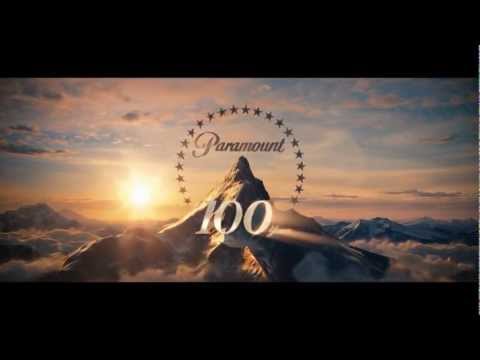
Neither studio has released an official reel of only its science fiction. These anniversary reels come closest. Paramount’s centennial trailer from 2012 and Warner Bros.’ 100th anniversary reel from 2023 both run through their biggest sci-fi titles alongside everything else.
Paramount’s franchises and the VFX behind them
Mission: Impossible
Films: Eight, 1996 to 2025
Latest budget: $300 million to $400 million reported for The Final Reckoning (2025)
Lead VFX: ILM on The Final Reckoning, with Halon on previs and Clear Angle Studios on scanning
Box office: $598.8 million for The Final Reckoning
Mission: Impossible is the franchise that tied Skydance to Paramount in the first place. Skydance came aboard with Ghost Protocol in 2011 and stayed through The Final Reckoning, the last film the two companies co-produced before they merged.
Tom Cruise does the stunts for real. That puts the VFX work in support roles: rig and wire removal, set extensions, digital doubles for the shots no one could safely film. In Ghost Protocol, Cruise climbed the outside of the Burj Khalifa. In The Final Reckoning, he hung off an open-cockpit biplane flying upside down. He also set a Guinness World Record with 16 jumps on a burning parachute.
The Final Reckoning is one of the most expensive films ever made. At close to $600 million worldwide, it was also considered a box office disappointment.
Watch: Mission: Impossible – The Final Reckoning on Prime Video | Mission: Impossible – The Final Reckoning on Blu-ray | The Mission: Impossible collection on Blu-ray
Transformers
Films: Eight, including Bumblebee and the animated Transformers One
First film budget: $150 million (2007)
Lead VFX: ILM, about 450 shots, with Digital Domain adding 95
VFX supervisor: Scott Farrar
The 2007 Transformers pushed ILM into hard-surface animation at a scale no one had tried. Optimus Prime stood 28 feet tall and had 10,108 parts. The toy version on Farrar’s desk had 51.
ILM built 14 robot characters with more than 12.5 million polygons between them. Every part had to move when a robot transformed, so the change looked mechanical. The team peaked at 350 people across a year of production. The film earned an Oscar nomination for visual effects.
Watch: Transformers (2007) on Prime Video | Transformers (2007) on Blu-ray | The Transformers collection on 4K and Blu-ray
Star Trek
Feature films: 13, starting in 1979
2009 reboot budget: $150 million
2009 VFX: ILM, supervised by Roger Guyett
Oscars: Best Makeup for Star Trek (2009)
Star Trek gave computer graphics one of their first big screen moments. The Genesis Effect in Star Trek II: The Wrath of Khan (1982) is generally credited as the first fully computer-generated sequence in a feature film. The Lucasfilm Computer Graphics Division made it. That team later became Pixar.
J.J. Abrams’ 2009 reboot brought ILM back to the Enterprise with a fully digital ship and photoreal space battles. Star Trek Into Darkness (2013) earned an Oscar nomination for visual effects. On television, Paramount+ now carries every Star Trek series.
Watch: Star Trek (2009) on Prime Video | Star Trek (2009) on Blu-ray | The Star Trek movie collection
Top Gun
Top Gun: Maverick budget: $170 million
Box office: About $1.5 billion worldwide
VFX: About 2,400 shots, led by Method Studios (now part of Framestore)
VFX supervisor: Ryan Tudhope
Top Gun: Maverick (2022) was sold as practical flying, and the actors did fly in real F/A-18s. It also had about 2,400 VFX shots. Method Studios added CG jets, missiles, smoke plumes and explosions. The team replaced aircraft when an actor could not be filmed in the right plane, including the retired F-14 and the fictional Darkstar. Many aerial backgrounds were digitally extended.
Most of the audience walked out sure they had seen no effects at all. The film earned an Oscar nomination for visual effects. Skydance co-produced it.
Watch: Top Gun: Maverick on Prime Video | Top Gun: Maverick on Blu-ray | Top Gun: Maverick on 4K
Sonic the Hedgehog
First film budget: About $90 million (2020)
Redesign cost: About $5 million reported
VFX: MPC and Blur Studio
Franchise box office: More than $1.2 billion across three films
The first Sonic trailer in 2019 went badly. Fans hated the realistic, human-toothed design. Paramount pushed the release from November 2019 to February 2020 and had artist Tyson Hesse redesign the character closer to the game.
The redesign reportedly cost about $5 million. It turned a near-disaster into one of Paramount’s most reliable franchises. Three films and a spin-off TV series later, Sonic is a regular earner for the studio.
Watch: Sonic the Hedgehog on Prime Video | Sonic the Hedgehog on Blu-ray | The Sonic movie collection
Forrest Gump and Titanic
Forrest Gump budget: $55 million (1994)
Forrest Gump VFX: ILM, supervised by Ken Ralston
Titanic budget: $200 million (1997)
Titanic VFX: Digital Domain
Forrest Gump won the visual effects Oscar for work most viewers never noticed. Gary Sinise’s legs were removed shot by shot. Tom Hanks was composited into archival news footage with real presidents. The opening feather floats on a digital path.
Titanic was a Paramount and 20th Century Fox co-production, with Paramount releasing it in the U.S. The ship was built near full size on a new stage in Rosarito, Mexico. Digital Domain filled the decks with motion-captured digital passengers and built the ocean, the sinking and the wide shots of the ship at sea. Titanic won 11 Oscars, including visual effects.
Watch: Forrest Gump on Prime Video | Forrest Gump on Blu-ray | Titanic on Prime Video | Titanic on Blu-ray
Films the two studios already shared
Paramount and Warner Bros. have split some big films before. Under Skydance, both halves of these deals sit in one company.
Interstellar
Budget: $165 million (2014)
Release: Paramount in the U.S., Warner Bros. internationally
VFX: Double Negative (DNEG)
Oscar: Best Visual Effects
Christopher Nolan wanted the black hole Gargantua to be scientifically accurate. DNEG wrote a new renderer that traced light through warped space-time. Oliver James at DNEG worked through the math with Caltech physicist Kip Thorne in about 1,000 emails.
Some IMAX frames took up to 100 hours to render. The production generated close to 800 terabytes of data. The work produced two peer-reviewed papers with Thorne, one in the American Journal of Physics and one in Classical and Quantum Gravity.
Watch: Interstellar on Prime Video | Interstellar on Blu-ray | Interstellar on 4K
The Curious Case of Benjamin Button
Budget: About $150 million (2008)
Release: Paramount in the U.S., Warner Bros. internationally
VFX: Digital Domain
Oscar: Best Visual Effects
Digital Domain gave Brad Pitt a fully digital head for the elderly Benjamin. The CG head carries roughly the first 52 minutes of the film, mapped onto body actors. It was one of the first times a digital human held up in close-up dialogue scenes for that long.
Watch: The Curious Case of Benjamin Button on Prime Video | The Curious Case of Benjamin Button on Blu-ray
Warner Bros.’ franchises and the VFX behind them
Superman and DC
Superman (1978) budget: $55 million
Superman (2025) budget: $225 million
2025 VFX: 1,766 shots by Framestore, ILM and Weta FX
2025 box office: $618.7 million
The 1978 Superman promised “You’ll believe a man can fly,” and it delivered with front projection and Zoran Perisic’s Zoptic zoom system. It won a Special Achievement Oscar for visual effects.
James Gunn’s 2025 reboot split the work three ways. Framestore built Krypto, modeled on Gunn’s rescue dog Ozu, plus the Fortress of Solitude and the robots. ILM built a digital Metropolis. Weta FX handled the kaiju, the flying sequences and Green Lantern’s constructs. The Fortress holograms used 4D Gaussian splatting, reportedly the first time the technique was used in a feature film. Read more in our ILM Superman breakdown and our guide to Gaussian splatting.
Watch: Superman (2025) on Prime Video | Superman (2025) on Blu-ray | Superman (1978) on 4K
Harry Potter
Films: Eight, 2001 to 2011
Biggest budgets: About $250 million for Half-Blood Prince, and about $250 million shared by the two Deathly Hallows films
VFX: DNEG, Framestore, MPC, Cinesite, ILM and others
The Harry Potter series helped build the London VFX industry. Over ten years, nearly every major British effects house worked on it. ILM did the Hungarian Horntail in Goblet of Fire. DNEG did the Ukrainian Ironbelly in Deathly Hallows: Part 2. Framestore, MPC and Cinesite handled creatures and spell work across the series.
Warner Bros. bought Leavesden Studios, where the films were shot, in 2010. It is now home to the Harry Potter studio tour.
Watch: Harry Potter and the Deathly Hallows: Part 2 on Prime Video | Harry Potter and the Deathly Hallows: Part 2 on Blu-ray | The Harry Potter 8-film collection
The Lord of the Rings
Trilogy budget: About $281 million, shot back to back
Studio: New Line Cinema, now part of Warner Bros.
VFX: Weta Digital (now Weta FX)
Oscars: Best Visual Effects for all three films
New Line has been part of the Warner family since the 1996 Turner merger and was folded into Warner Bros. in 2008. Its biggest bet was Peter Jackson’s trilogy.
Weta Digital made two breakthroughs. Gollum, driven by Andy Serkis’ performance capture, set the template for digital characters with a real actor underneath. MASSIVE, crowd software written by Stephen Regelous, let thousands of soldiers fight with their own simple AI instead of being hand-animated. The Return of the King won all 11 Oscars it was nominated for.
Watch: The Lord of the Rings: The Return of the King on Prime Video | The Lord of the Rings: The Return of the King on Blu-ray | The Lord of the Rings trilogy on 4K
The Matrix
Budget: $63 million (1999)
VFX: Manex Visual Effects
VFX supervisor: John Gaeta
Oscars: Four, including Best Visual Effects
Bullet time came from an array of still cameras around the actor, fired in sequence instead of all at once. Strung together, the frames give an effective rate of about 12,000 frames per second, and the camera seems to move through a frozen moment. Manex rendered much of the film on a FreeBSD computer cluster.
The Matrix beat Star Wars: Episode I for the visual effects Oscar that year. The sequels pushed further with virtual cinematography for the Burly Brawl, where Neo fights a hundred copies of Agent Smith.
Watch: The Matrix on Prime Video | The Matrix on Blu-ray | The Matrix 4-film collection
Christopher Nolan’s Warner Bros. years
The Dark Knight budget: $185 million (2008)
Inception budget: $160 million (2010)
VFX: Double Negative (DNEG) on both
Inception Oscar: Best Visual Effects
The Dark Knight was the first major Hollywood feature to shoot part of its running time on IMAX film cameras. Inception mixed a practical rotating hallway with DNEG’s digital work, including Paris folding over on itself. Inception won the visual effects Oscar.
DNEG grew alongside Nolan through these films and Interstellar. Tenet (2020), Nolan’s last film at Warner Bros. before he moved to Universal for Oppenheimer, won DNEG another visual effects Oscar.
Watch: The Dark Knight on Prime Video | The Dark Knight on Blu-ray | Inception on Prime Video | Inception on Blu-ray
Gravity
Budget: Reported between $80 million and $130 million (2013)
VFX: Framestore, over three years
Box office: $723.2 million
Oscars: Seven, including Best Visual Effects
About 80 percent of Gravity is computer generated, according to VFX supervisor Tim Webber. That is more than Avatar. Framestore and director Alfonso Cuarón lit Sandra Bullock inside a box of LED panels that played the CG environment around her. Time named the light box one of the best inventions of 2013. It is a direct ancestor of today’s LED volume stages.
Watch: Gravity on Prime Video | Gravity on Blu-ray | Gravity on 4K
Mad Max: Fury Road
Budget: About $150 million (2015)
VFX: Iloura as lead vendor, more than 2,000 shots
Oscars: Six, though visual effects went to Ex Machina
Fury Road is known for real vehicles crashing in the Namibian desert. It also has more than 2,000 VFX shots. Artists removed rigs, built the sandstorm and replaced many of the skies. The practical work and the digital work are so tightly mixed that most viewers can’t find the seams.
Watch: Mad Max: Fury Road on Prime Video | Mad Max: Fury Road on Blu-ray | Mad Max: Fury Road on 4K
Dune
Dune (2021) budget: $165 million
Dune: Part Two (2024) budget: $190 million
VFX: DNEG
Oscars: Best Visual Effects for both films
Legendary and Warner Bros. made Denis Villeneuve’s Dune films. Both won the visual effects Oscar. Production swapped green screen for sand-colored backing screens, so the spill light on the actors matched the desert. DNEG built the sandworms, ornithopters and shields.
Dune: Part Three opens December 18, 2026, under Skydance ownership. This time Villeneuve shot primarily on 65mm film, with select sequences on IMAX film.
Watch: Dune: Part Two on Prime Video | Dune: Part Two on Blu-ray | Dune: Part Two on 4K
Blade Runner
Blade Runner 2049 budget: Reported between $150 million and $185 million (2017)
VFX: Framestore, DNEG and MPC among others
Oscar: Best Visual Effects
Warner Bros. released Ridley Scott’s Blade Runner in 1982, with Douglas Trumbull’s miniature Los Angeles. Denis Villeneuve’s sequel, Blade Runner 2049, was released by Warner Bros. in North America and Sony internationally. It won the visual effects Oscar. Its work included a digital recreation of Sean Young’s Rachael.
Watch: Blade Runner 2049 on Prime Video | Blade Runner 2049 on Blu-ray | Blade Runner: The Final Cut on 4K
A Minecraft Movie
Budget: $150 million (2025)
Box office: $961.2 million
VFX: Sony Pictures Imageworks, Weta FX and Digital Domain
A Minecraft Movie was the fifth-highest-grossing film of 2025. Three vendors had to make a world of cubes feel solid next to live actors, with block textures that still read as Minecraft.
Watch: A Minecraft Movie on Prime Video | A Minecraft Movie on Blu-ray
HBO’s VFX on television
The deal also brings HBO into the same house as Paramount+. HBO made some of the most expensive effects shows on TV. Game of Thrones won multiple Emmys for special visual effects, with Pixomondo, Image Engine, Scanline VFX and Rodeo FX among its vendors. Its final season reportedly cost about $15 million an episode. House of the Dragon followed at a reported $20 million an episode. The Last of Us is the newest big effects series on HBO.
Watch: Game of Thrones: The Complete Series on Blu-ray | House of the Dragon on Blu-ray
Visual effects Oscar winners now under one roof
Every film below won the Academy Award for visual effects and was made or released by Paramount, Warner Bros. or New Line. Raiders of the Lost Ark and Temple of Doom were released by Paramount, though Lucasfilm and Disney own the Indiana Jones films today. For the decades before 1978, when Paramount ran its own effects department, see our Paramount VFX history.
| Year | Film | Studio | Lead VFX |
|---|---|---|---|
| 1978 | Superman | Warner Bros. | Special Achievement Award |
| 1981 | Raiders of the Lost Ark | Paramount | ILM |
| 1984 | Indiana Jones and the Temple of Doom | Paramount | ILM |
| 1987 | Innerspace | Warner Bros. | ILM |
| 1994 | Forrest Gump | Paramount | ILM |
| 1997 | Titanic | Paramount, 20th Century Fox | Digital Domain |
| 1999 | The Matrix | Warner Bros. | Manex |
| 2001 | The Fellowship of the Ring | New Line | Weta Digital |
| 2002 | The Two Towers | New Line | Weta Digital |
| 2003 | The Return of the King | New Line | Weta Digital |
| 2007 | The Golden Compass | New Line | Framestore, Rhythm & Hues |
| 2008 | The Curious Case of Benjamin Button | Paramount, Warner Bros. | Digital Domain |
| 2010 | Inception | Warner Bros. | DNEG |
| 2011 | Hugo | Paramount | Pixomondo |
| 2013 | Gravity | Warner Bros. | Framestore |
| 2014 | Interstellar | Paramount, Warner Bros. | DNEG |
| 2017 | Blade Runner 2049 | Warner Bros., Sony | Framestore, DNEG, MPC |
| 2020 | Tenet | Warner Bros. | DNEG |
| 2021 | Dune | Warner Bros. | DNEG |
| 2024 | Dune: Part Two | Warner Bros. | DNEG |
For a wider view of the films that shaped the craft, see our list of the 50 most influential visual effects films. To see how shots like these come apart layer by layer, start with our guide to VFX breakdowns.
Streaming and Blu-ray
Prime Video availability changes month to month. Some of these films are included with a membership, others are rent or buy. If you don’t have Prime, you can start an Amazon Prime free trial here. For the effects work, the 4K and Blu-ray releases are worth it. Several include making-of features you won’t find on streaming.
This post contains Amazon affiliate links. We may earn a small commission on qualifying purchases at no extra cost to you. See our affiliate disclosure.
Leave a Reply